
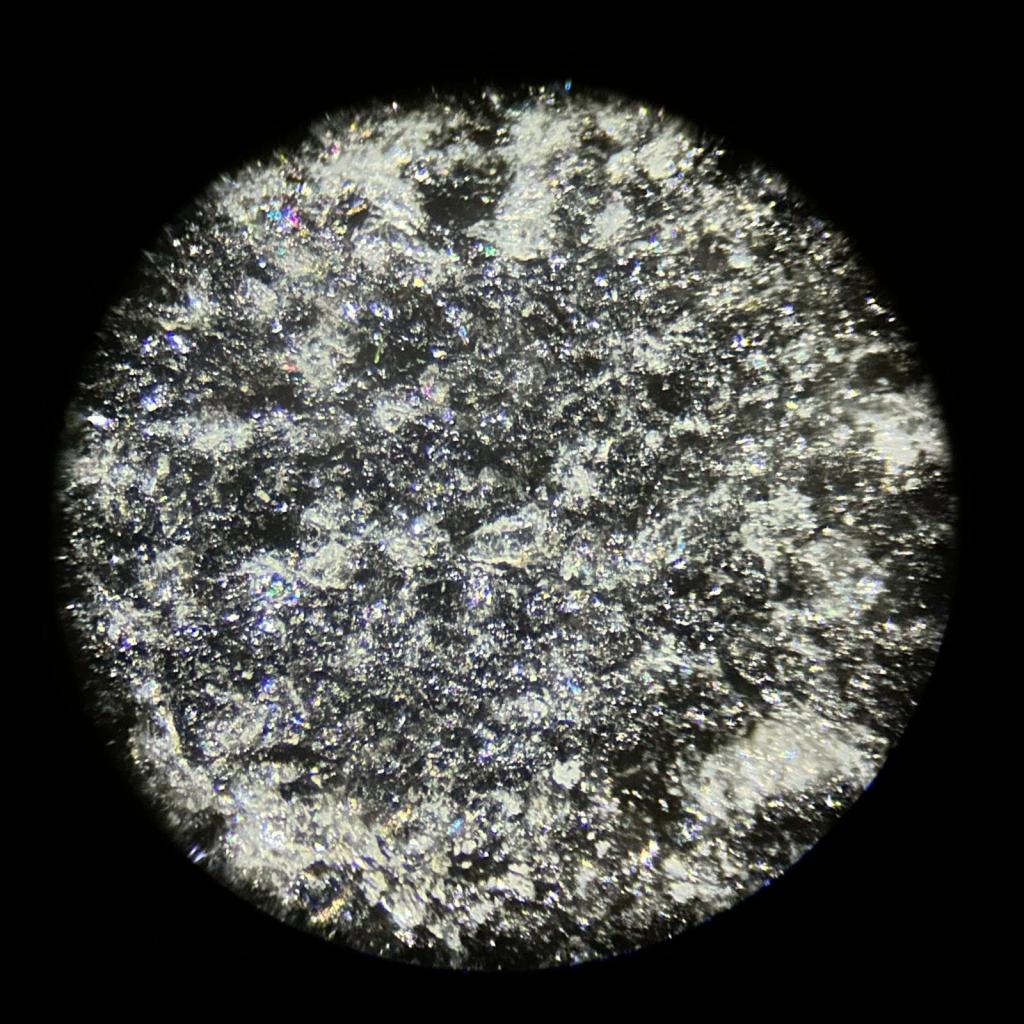
Today I had the chance to examine a tiny shard of nature’s own glass—obsidian—under the microscope, and what I saw was nothing short of mesmerizing.
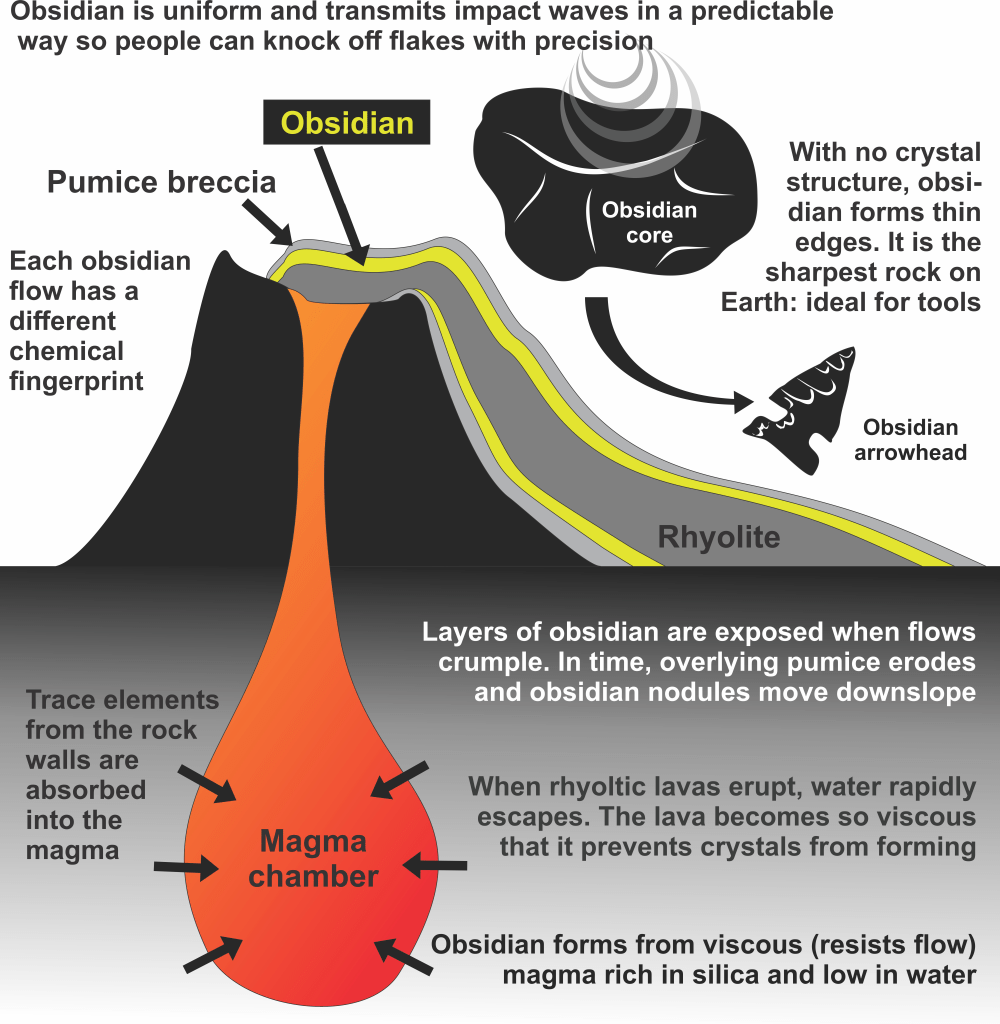
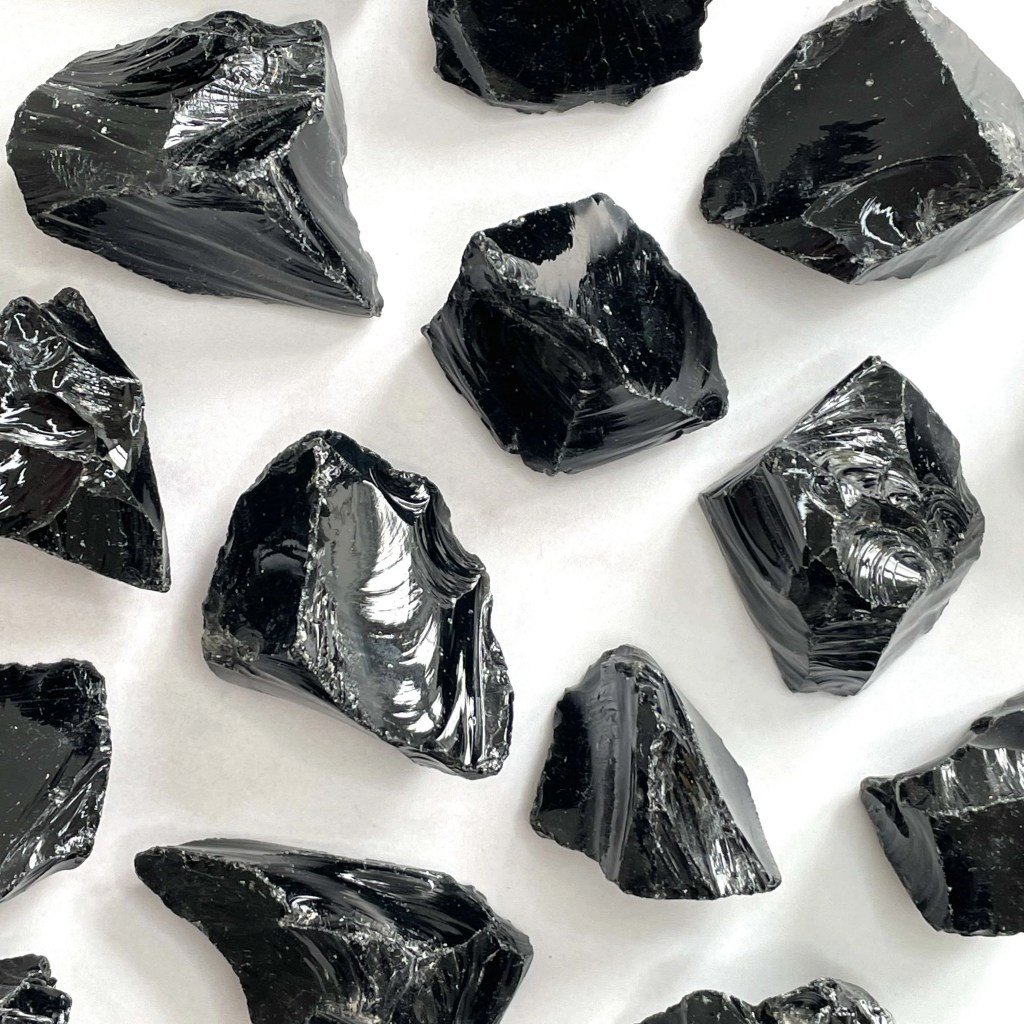
Obsidian is a naturally occurring volcanic glass formed when felsic lava cools so rapidly that crystal growth is inhibited. At the macroscopic level, it’s usually jet black and glossy, but zooming in reveals an entirely different world.
Through the lens, the obsidian becomes a glittering landscape of crystalline reflections and chaotic textures. In this image, captured at high magnification, the smooth and uniform surface we associate with obsidian transforms into a galaxy of fractured light. Specks catch the illumination like stars, while tiny inclusions and microfractures form an intricate mosaic. There are iridescent flashes—likely due to microscopic mineral inclusions or the internal stress structure of the glass—giving the image a sparkling, cosmic quality.
What fascinates me most is the contrast between the volcanic violence that creates obsidian and the delicate, almost ethereal patterns revealed under the microscope. It’s a reminder that even the most destructive forces can produce something profoundly beautiful—if you just know where to look.
Have you ever looked at a rock under a microscope? If not, I highly recommend it. There’s a hidden universe in every sliver of stone, just waiting to be explored.

 Real Sheldon: a Science Blog
Leave a reply to raffaella dell’orto Cancel reply