

Relativity is one of the most famous scientific theories of the 20th century, but how well does it explain the things we see in our daily lives?
“God doesn’t play dice” A. Einstein
Electromagnets
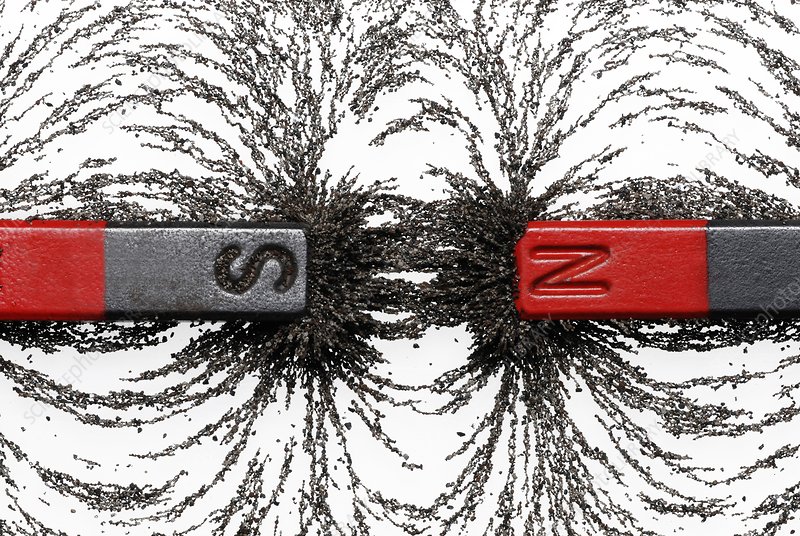
Magnetism is a relativistic effect, and you can see this demonstrated in generators. If you take a loop of wire and move it through a magnetic field, you generate an electric current. The charged particles in the wire are affected by the changing magnetic field, which forces some of them to move and creates the current.

But now, picture the wire at rest and imagine the magnet is moving. In this case, the charged particles in the wire (the electrons and protons) aren’t moving anymore, so the magnetic field shouldn’t be affecting them. But it does, and a current still flows. This shows that there is no privileged frame of reference.
Assuming the currents are moving in the same direction, the electrons in the second wire are motionless compared to the electrons in the first wire. (This assumes the currents are about the same strength.) Meanwhile, the protons in both wires are moving in comparison to the electrons in both wires. Because of the relativistic length contraction, they appear to be more closely spaced, so there’s more positive charge than negative charge per length of wire. Because like charges repel, the two cables also repel.
Currents in opposite directions result in attraction, because compared to the first wire, the electrons in the other cable are more crowded, thus creating a net negative charge, according to the University of Illinois at Urbana-Champaign. Meanwhile, the protons in the first wire create a net positive charge, and opposite charges attract.
GPS Navigation
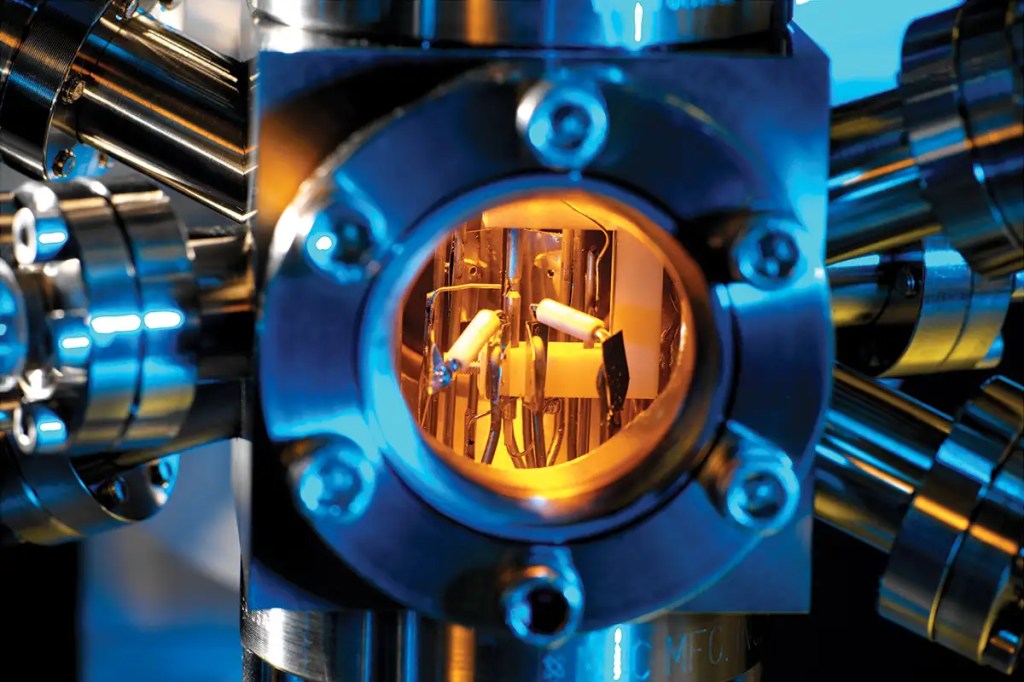
For your car’s GPS navigation to function as accurately as it does, satellites have to consider relativistic effects, according to PhysicsCentral. This is because even though satellites aren’t moving anywhere close to the speed of light, they are still going pretty fast. The satellites are also sending signals to ground stations on Earth. These stations (and the GPS technology in a car or smartphone) are all experiencing higher accelerations due to gravity than the satellites in orbit.
To get that pinpoint accuracy, the satellites use clocks that are accurate to a few nanoseconds (billionths of a second). Because each satellite is 12,600 miles (20,300 kilometres) above Earth and moves at about 6,000 mph (10,000 km/h), there’s a relativistic time dilation that tacks on about 4 microseconds each day. Add in the effects of gravity, and the time dilation effect goes up to about 7 microseconds (millionths of a second).
The difference is very real: If no relativistic effects were accounted for, a GPS unit that tells you it’s a half-mile (0.8 km) to the next gas station would be 5 miles (8 km) off after only one day, according to Physics Central.
Gold’s Yellow Colour
Most metals are shiny because the electrons in the atoms jump from different energy levels, or “orbitals.” Some photons that hit the metal get absorbed and reemitted, though at a longer wavelength. However, most visible light gets reflected.
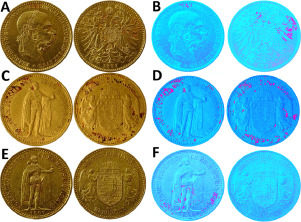
Gold is a heavy element, so the inner electrons move fast enough that the relativistic mass increase and the length contraction are significant, according to a statement from Heidelberg University in Germany. As a result, the electrons spin around the nucleus in shorter paths, with more momentum. Electrons in the inner orbitals carry energy that is closer to the energy of outer electrons, and the wavelengths that get absorbed and reflected are longer.

Longer wavelengths of light mean that some of the visible light that would usually be reflected gets absorbed, and that light is on the blue end of the spectrum. White light is a mix of all the colours of the rainbow, but in gold’s case, when light gets absorbed and reemitted, the wavelengths are usually longer. That means the mix of light waves we see tends to have less blue and violet in it. Because yellow, orange and red light have longer wavelengths than blue light, gold appears yellowish, according to the BBC.
Gold’s Resistance to Corrosion
The relativistic effect on gold’s electrons is also one reason it doesn’t corrode or easily react with anything else, according to a 1998 paper in the journal Gold Bulletin.
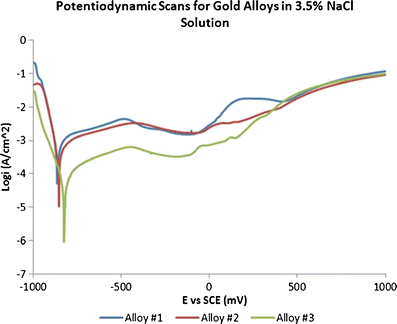
Gold has only one electron in its outer shell, but it still is not as reactive as calcium or lithium. Instead, because the electrons in gold are “heavier” than they should be, since they are moving near the speed of light, increasing their mass, they are held closer to the atomic nucleus. This means that the outermost electron isn’t likely to be where it can react with anything at all; it’s just as likely to be among the electrons that are close to the nucleus.
Liquid Mercury
Mercury is also a heavy atom, with electrons held close to the nucleus because of their speed and consequent mass increase. The bonds between mercury atoms are weak, so mercury melts at lower temperatures and is typically a liquid when we see it, according to Chemistry World.

Your old TV
Until about the early 2000s, most televisions and monitors had cathode ray tube screens. A cathode ray tube works by firing electrons at a phosphor surface with a big magnet. Each electron makes a lighted pixel when it hits the back of the screen, and the electrons fire out to make the picture move at up to 30% the speed of light. Relativistic effects are noticeable, and when manufacturers shaped the magnets, they had to consider those effects!

Light
Isaac Newton assumed that there is an absolute rest frame, or an external perfect frame of reference that we could compare all other frames of reference against. If he had been right, we would have to come up with a different explanation for light, because it wouldn’t happen at all.
“Not only would magnetism not exist, but light would also not exist, because relativity requires that changes in an electromagnetic field move at a finite speed instead of instantaneously,” Moore said. “If relativity did not enforce this requirement … changes in electric fields would be communicated instantaneously … instead of through electromagnetic waves, and both magnetism and light would be unnecessary.” (‽)
The Sun
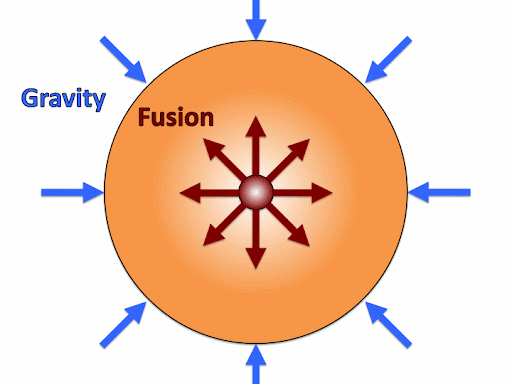
Without Einstein’s most famous equation — E = mc^2 — the sun and the rest of the stars wouldn’t shine. In the center of our parent star, intense temperatures and pressures constantly squeeze four separate hydrogen atoms into a single helium atom, according to Ohio State University. The mass of a single helium atom is just slightly less than that of four hydrogen atoms. What happens to the extra mass? It gets directly converted into energy, which shows up as sunlight on our planet.
That’s it!
Who knew that just one theory could explain so many phenomena? Do you know other examples of useful applications of abstract physics theorems? Let me know in the comments!

 Real Sheldon: a Science Blog
Leave a reply to draffy72 Cancel reply