
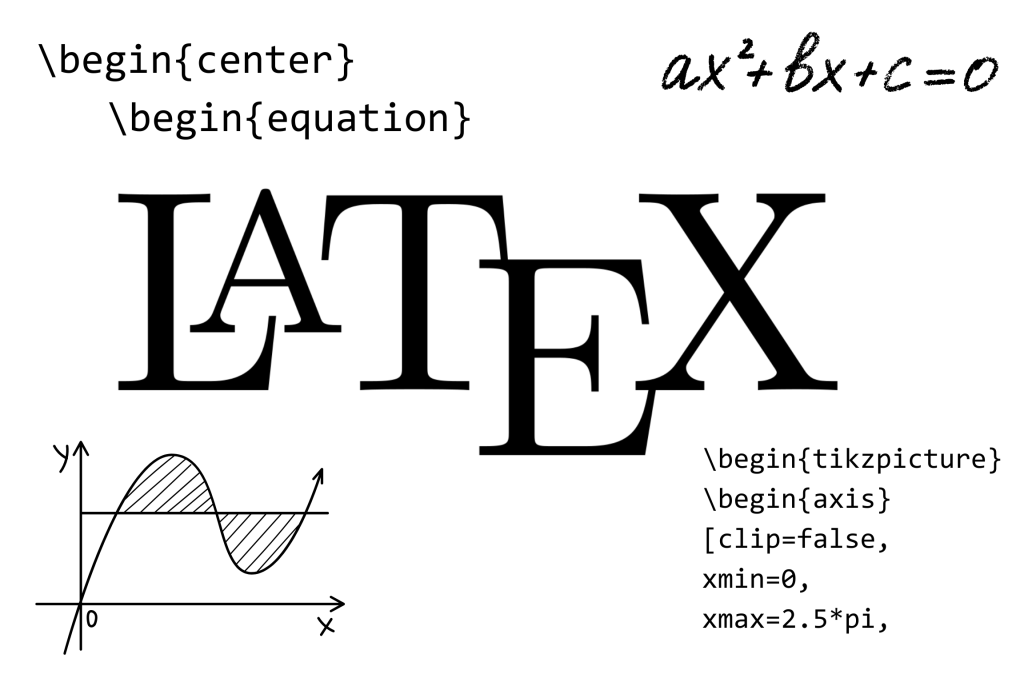
From Academic Hack to Global Standard
In the world of academic writing, clarity of ideas is essential—but so is clarity of presentation. Equations must align perfectly, references must stay organized, and documents often stretch across hundreds of pages. For many years, scholars have faced a fundamental problem: how to produce professional, mathematically precise documents efficiently? The solution emerged in the late twentieth century: LaTeX, a system that would transform academic publishing across the globe.
Donald Knuth and TeX
The story begins in the late 1970s with computer scientist Donald E. Knuth, who was writing the second edition of his monumental work The Art of Computer Programming. When Knuth saw the poor typesetting quality produced by contemporary digital publishing tools, he decided to build his own system.
In 1978 he began developing TeX, a typesetting engine designed to produce beautifully formatted documents. TeX introduced a revolutionary idea: instead of visually formatting text on a page, the author would write plain text commands describing the structure and layout. The computer would then compile the instructions into a perfectly typeset document.
Knuth’s system quickly gained attention in scientific circles because it produced output comparable to professional publishing houses—something few digital tools could achieve at the time.
Leslie Lamport and the Birth of LaTeX
While TeX was powerful, it was also complex. Writing long documents required extensive formatting commands that many researchers found cumbersome.
In the early 1980s, computer scientist Leslie Lamport created a macro package built on top of TeX to simplify its use. This system became LaTeX, first released in 1985.
Lamport’s key innovation was abstraction. Instead of manually formatting each element, authors described the logical structure of their documents:
\section{} for sections
\title{} for titles
\begin{equation} for mathematical expressions
The result allowed scholars to focus on ideas rather than layout; LaTeX would handle the formatting and presentation automatically.
Popularity
LaTeX quickly became popular in fields where mathematical notation and structured documents are essential. Many characteristics made it a staple:
1. Superior Mathematical Typesetting
LaTeX produces precise, elegant equations that remain the gold standard in academic publishing: all complex expressions that would be difficult to format in word processors become straightforward.
2. Consistency in Large Documents
Books, dissertations, and multi-author research papers require consistent formatting across hundreds of pages. LaTeX handles automatic numbering for sections, figures, tables, and equations.
3. Robust Citation Management
Bibliographic tools such as BibTeX and later BibLaTeX allow researchers to manage hundreds of references with ease and efficiency.
4. Stability and Longevity
Unlike proprietary formats tied to specific software versions, LaTeX documents are plain text files. (A document written decades ago can still be compiled today!)
5. Open and Extensible Ecosystem
Thousands of packages extend LaTeX with specialized capabilities—from drawing scientific diagrams to creating presentations; from separated environments for theorems to useful, complex scatterplots.
The Global Academic Infrastructure
Today LaTeX is fundamental in the infrastructure of scholarly communication.
Major scientific publishers, including journals in mathematics, physics, computer science, and engineering, provide official LaTeX templates. Many universities encourage or require LaTeX for theses and reports.
In disciplines such as:
- mathematics
- theoretical physics
- computer science
- statistics
- economics
LaTeX is effectively the default writing system.
Even outside STEM fields, it has gained popularity among scholars who value typographic quality and order.
Modern Tools
Although early LaTeX workflows required command-line compilation and manual file management, modern tools have made the system far more accessible.
Platforms such as Overleaf, for example, allow users to write LaTeX directly in the browser with real-time preview, collaborative editing, and integrated citation management.
and Beyond…
While LaTeX remains strongest in research environments, its influence extends further:
- technical documentation
- scientific books
- lecture notes
- mathematical textbooks
- professional presentations via Beamer
Its philosophy {separating structure from formatting} has influenced modern publishing systems and markup languages and it remains a constant in many different programming-languages-driven text processing softwares!
LaTeX Still Matters
More than forty years after its creation, LaTeX remains remarkably relevant. In an era of cloud software and rapidly changing digital tools, its core strengths haven’t changed:
- precision
- reproducibility
- long-term compatibility
- unmatched mathematical typography
For researchers, LaTeX represents more than a writing tool. It is part of the shared technical language of academia, enabling scholars around the world to communicate complex ideas with clarity and consistency.
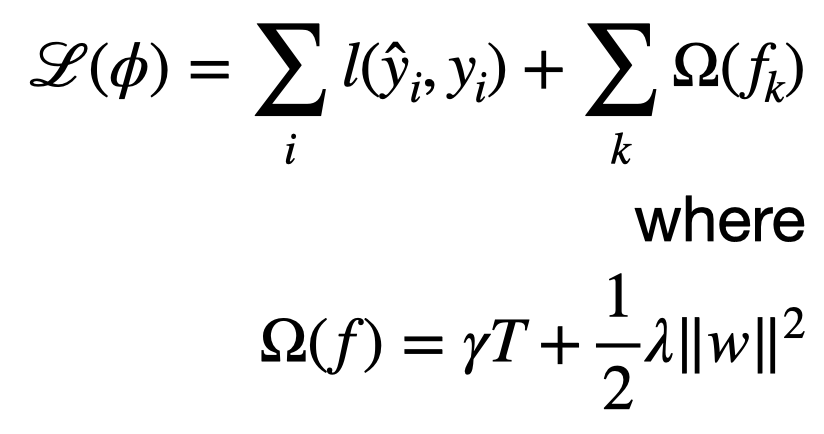
Above is a rather unknown but beautiful formula, while here is a curiosity: the X inLaTeX is pronounced as a K, because it stands for the greek letter chi” !
In that sense, LaTeX is not merely software—it is an enduring infrastructure of scientific thought.
Bibliography
Donald E. Knuth. The TeXbook. Addison-Wesley, 1984.
Leslie Lamport. LaTeX: A Document Preparation System. Addison-Wesley, 2nd ed., 1994.
Frank Mittelbach and Michel Goossens. The LaTeX Companion. Addison-Wesley, 2nd ed., 2004.
 Real Sheldon: a Science Blog
Leave a comment