
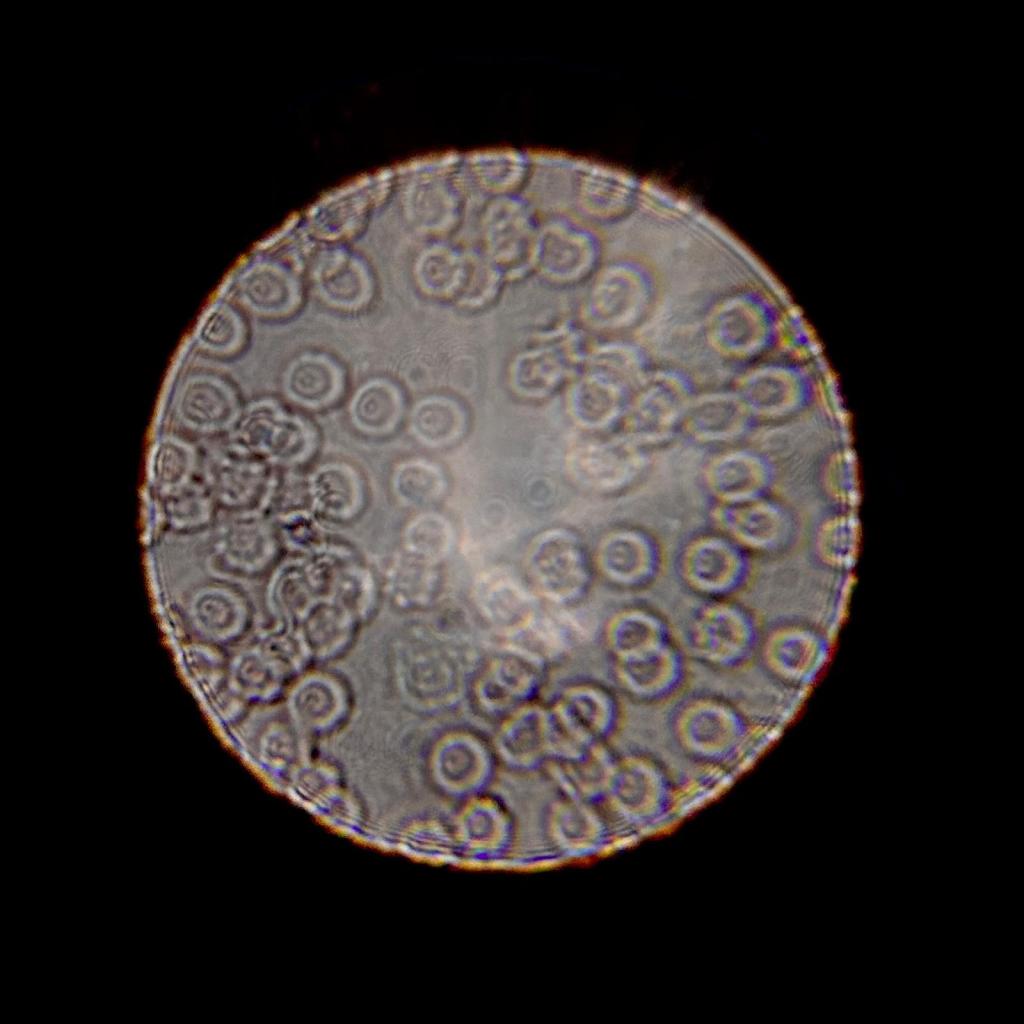
Under the microscope, blood transforms from something we usually think of as plain red liquid into a stunning, intricate world of tiny living structures. The photo here captures that world beautifully: a field full of circular shapes, each one a small, biconcave disc known as a red blood cell.
Why Red Blood Cells Have That “Donut” Look
Every red blood cell (RBC) in the image has a bright ring and a darker centre, giving it the appearance of a soft, cushiony donut.
That shape isn’t just unique — it’s brilliant engineering by nature.
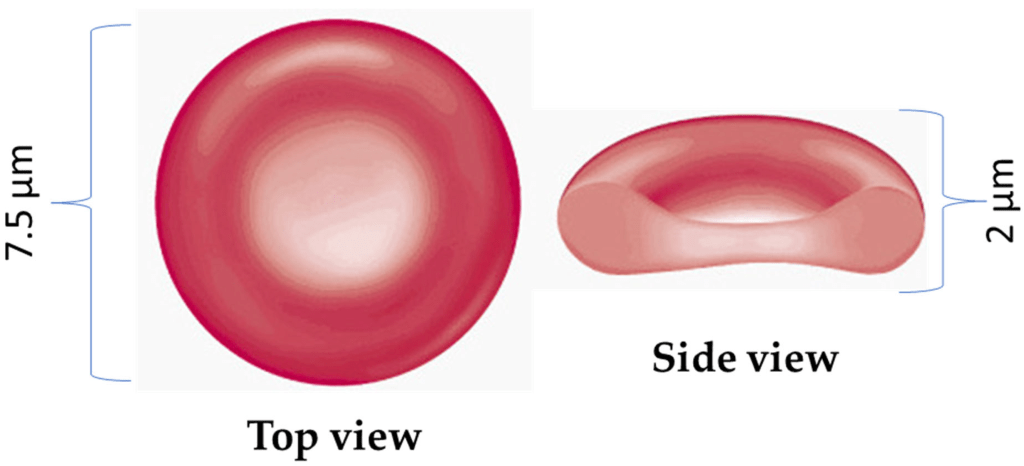
1. More Surface Area
By curving inward in the centre, RBCs increase their surface area relative to volume.
More surface area means more contact with oxygen molecules.
More contact means better oxygen transport.
2. Flexibility
This shape makes red cells incredibly bendable.
They can squeeze through capillaries so thin that a straight, rigid cell would get stuck.
The slightly depressed centre helps the cell fold without breaking.
3. Space for Hemoglobin
Red blood cells don’t have a nucleus — that’s why you see a pale or dark centre instead of a solid dot.
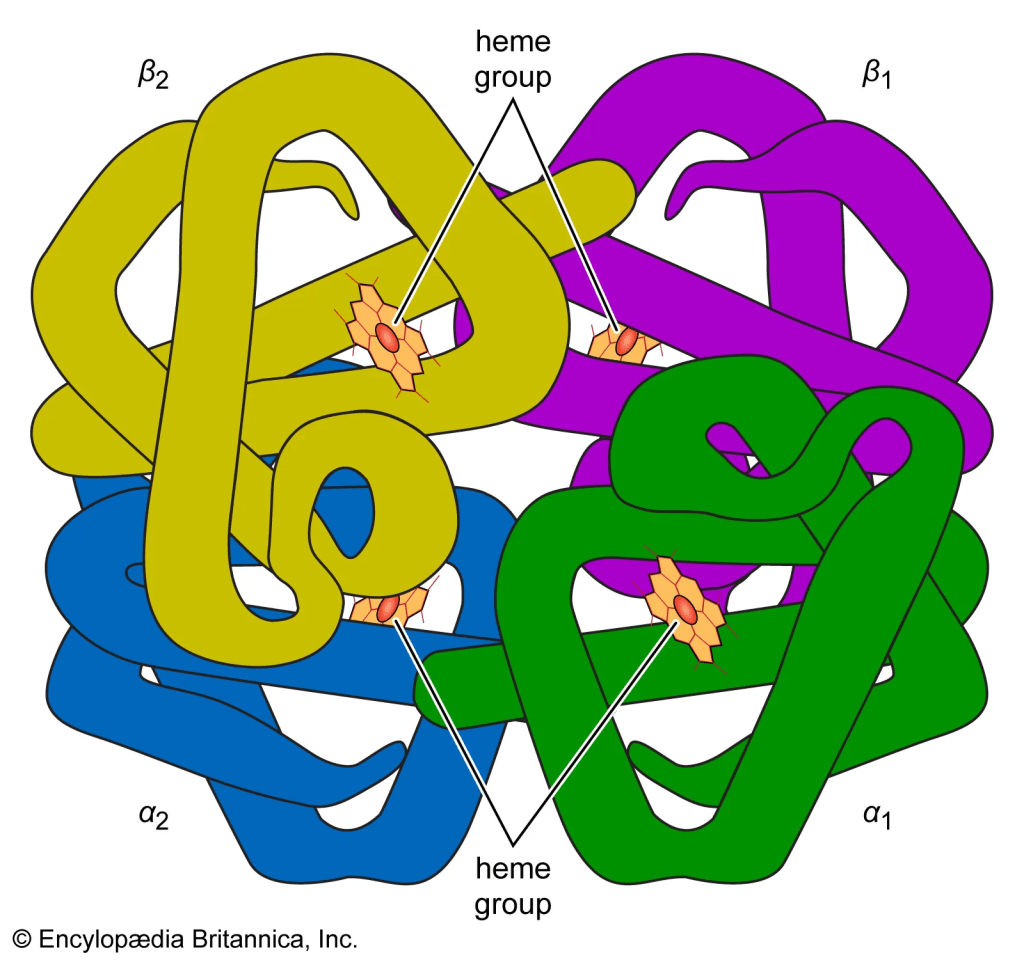
They sacrifice the nucleus to pack themselves full of hemoglobin, the molecule that grabs oxygen in the lungs and releases it to tissues.
So that “donut” shape isn’t a hole — it’s the signature design of a cell optimized for a single mission: carry oxygen efficiently.
What the Photo Shows Us
Our image actually highlights several cool things about blood:
A Sea of Oxygen Carriers
The circular shapes all around the field are red blood cells.
Their uniformity and spacing demonstrate how neatly these cells stack, flow, and fill space.
Biconcave Profiles
Each cell shows that classic ring-and-centre effect, showing off the exact physics of their shape: light catches the thick edges more strongly and passes more easily through the thinner middle.
Natural Patterns
Some groups of cells cluster slightly, forming wave-like or coin-stack patterns.
This is how blood behaves even inside the body — cells organize, separate, and travel with surprising elegance.
Why This View Matters
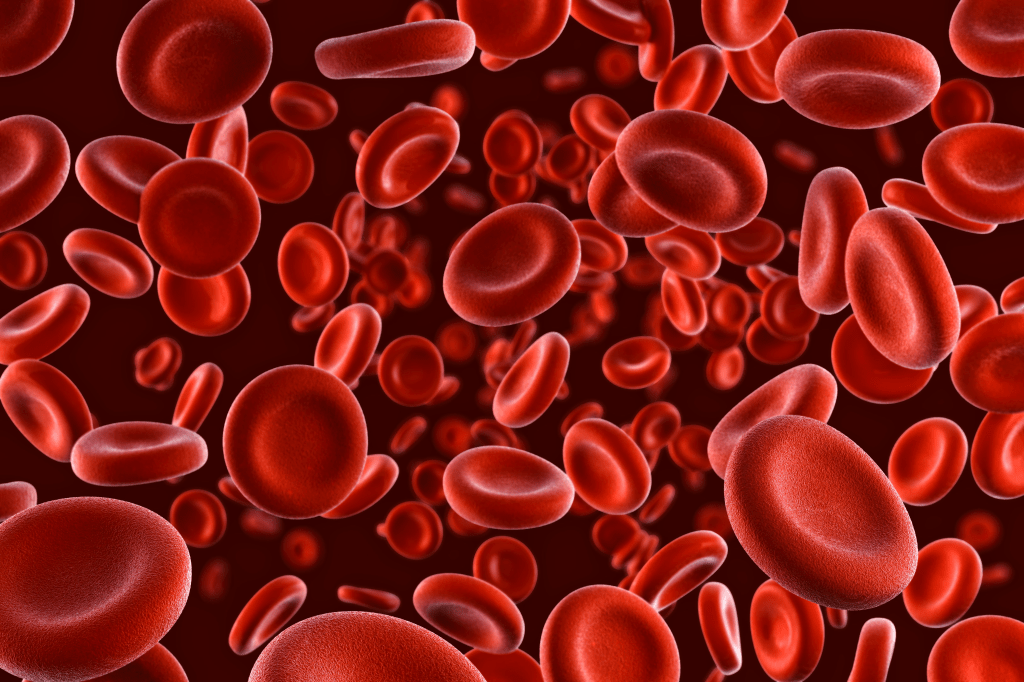
A drop of blood contains about 5 million red blood cells per microlitre.
Seeing them blown up like this gives a sense of scale and beauty you can’t get otherwise.
It’s a reminder that something so ordinary — a tiny drop — is made of millions of specialized components, each perfectly shaped for its purpose.
Your photo doesn’t just show blood.
It shows evolution’s craftsmanship, frozen in a microscopic moment.
 Real Sheldon: a Science Blog
Leave a comment