
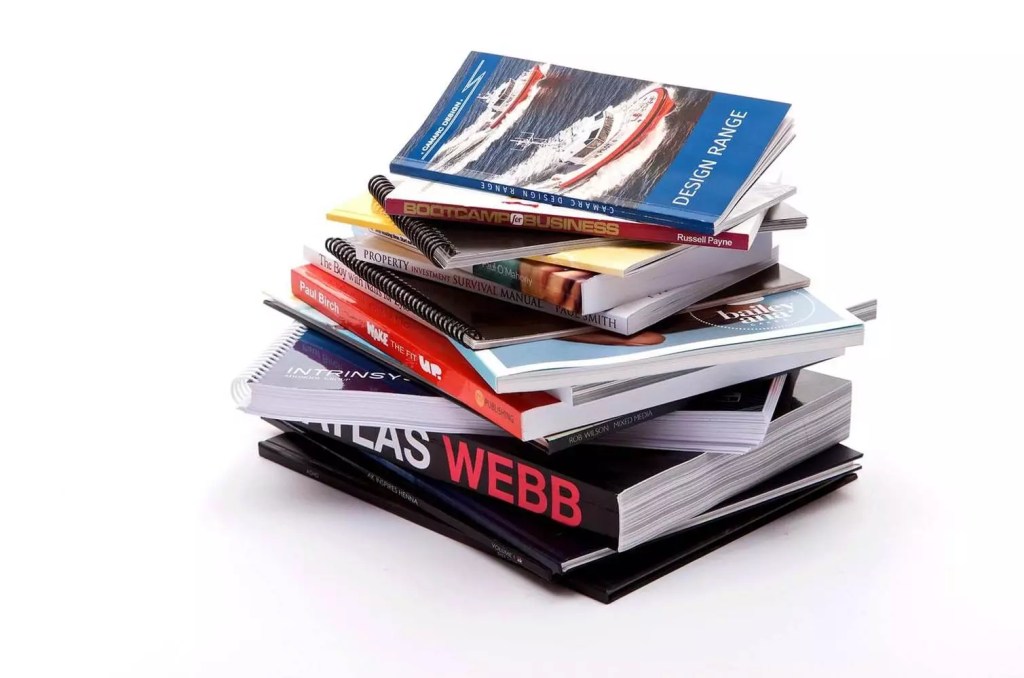
Few inventions have shaped human civilization as profoundly as the printing press. The story of book printing is a journey through innovation, creativity, and the democratization of knowledge — a story that spans centuries and continents.
Before the Press: The Age of Manuscripts
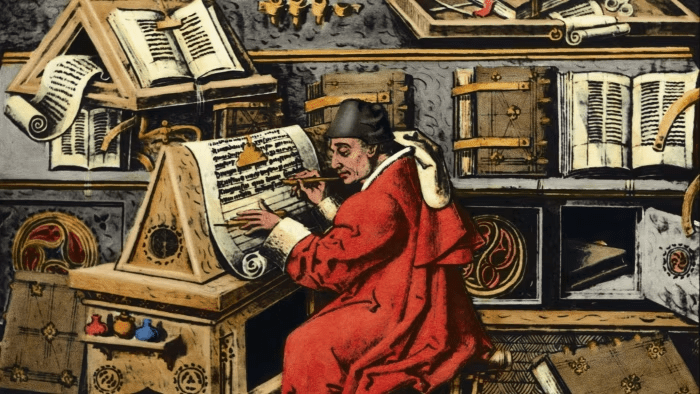
Before printing, books were painstakingly copied by hand. In medieval Europe, this task often fell to monks working in scriptoria — quiet rooms where manuscripts were transcribed onto parchment or vellum. These handwritten volumes were beautiful but rare, expensive, and reserved mostly for the elite or the Church.
Meanwhile, in Asia, remarkable progress was already being made toward mechanical reproduction. As early as the 9th century, Chinese printers used woodblock printing to reproduce texts and images, carving characters into wooden slabs and stamping them onto paper.
Gutenberg’s Revolution
The true revolution came around 1440, when Johannes Gutenberg, a German goldsmith, invented the movable-type printing press in Mainz. His key innovation was the creation of reusable metal letters that could be rearranged for different pages — a system inspired by earlier movable-type experiments in East Asia but adapted to the Latin alphabet and Western production methods.
Gutenberg’s press combined these metal types with oil-based ink and a screw press mechanism, resulting in faster, cheaper, and more durable printing. His masterpiece, the Gutenberg Bible (circa 1455), remains one of the most beautifully printed books in history — and a symbol of a new era in human communication.

The Spread of Print Culture
Within decades, printing presses had spread across Europe. By 1500, over 20 million books had been printed. Cities like Venice, Paris, and Nuremberg became centres of the book trade. The press not only transformed how information was shared, but also helped fuel the Renaissance, Reformation, and Scientific Revolution.
Books were no longer the privilege of a few — they became a public good, accessible to merchants, scholars, and eventually, the public.
Industrial and Modern Printing
The 19th century brought industrial innovations that made printing even faster and cheaper. Steam-powered presses, rotary presses, and later, linotype machines revolutionized newspaper and book production. By the 20th century, offset printing became the dominant technology, producing crisp, high-volume prints with incredible efficiency.
The Digital Turn
In recent decades, the printing landscape has shifted again. The rise of digital printing and e-books has transformed how we create, distribute, and read texts. Today, a writer can self-publish a digital book or print-on-demand copy with a few clicks — something Gutenberg could never have imagined.

The Enduring Power of Print
Despite digital alternatives, printed books continue to thrive. There’s something timeless about the weight of a book in your hands, the texture of the paper, the smell of ink — a sensory experience that connects us to centuries of human thought and artistry.
From carved woodblocks to cloud storage, the story of book printing is ultimately the story of our desire to share ideas, preserve knowledge, and make our voices heard across time.
 Real Sheldon: a Science Blog
Leave a comment