
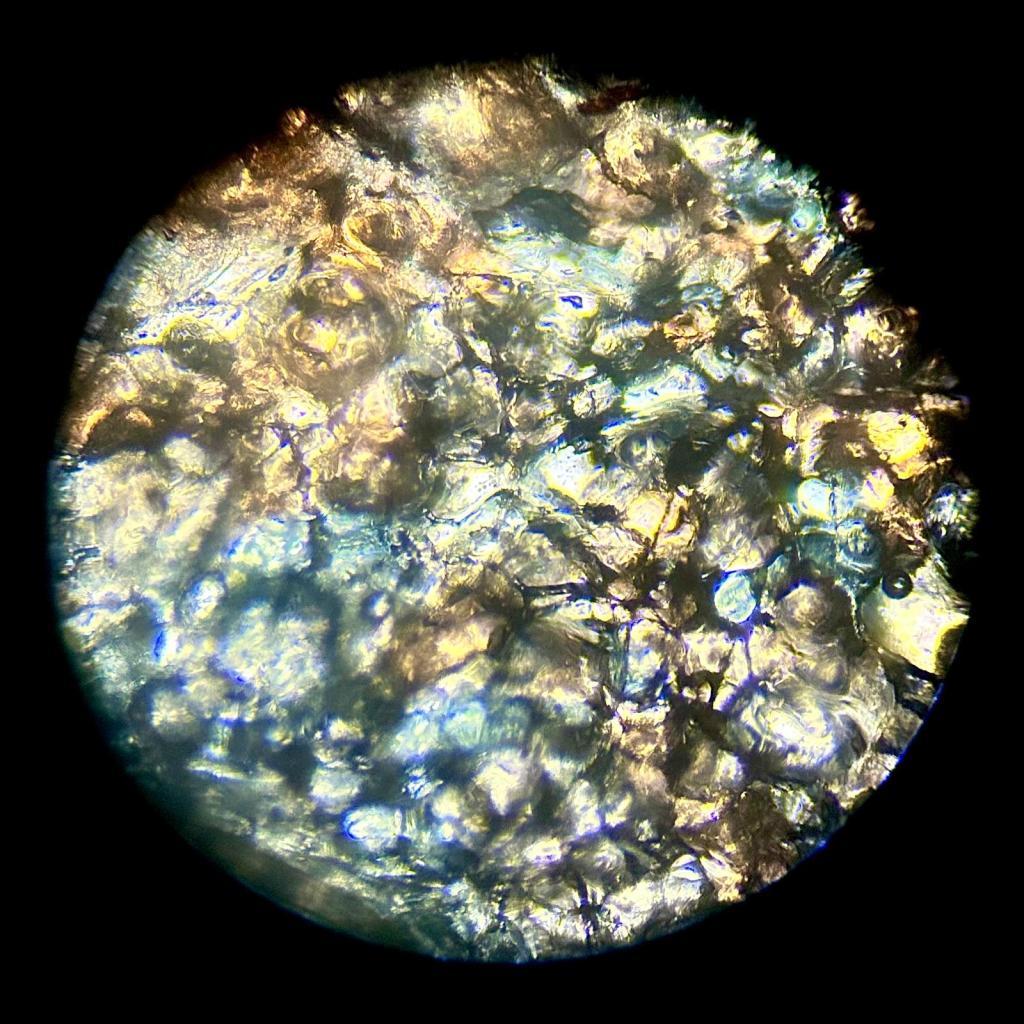
To the naked eye, a strawberry is a familiar symbol of sweetness and summer — all scarlet sheen and fragrant charm. But beneath its skin lies an entire world waiting to be discovered. Captured under magnification, this microscopic image unveils a tapestry of golden, translucent, and amber tones — an abstract chaos of fibers, cells, and sugar-laced patterns.
This is not just fruit. It is a living mosaic, a cellular universe where each shimmer and glint is a reminder that even the everyday contains the extraordinary.
What you see here is the epidermal layer of the strawberry — a dense, almost glass-like surface that reflects light with opalescent hues. The warm golds and soft blues are due to the way light refracts through juice-filled cells and microscopic plant hairs. The branching filaments might be vascular traces, frozen mid-function, once ferrying water and nutrients to plump up this beloved fruit.
Uses and Symbolism
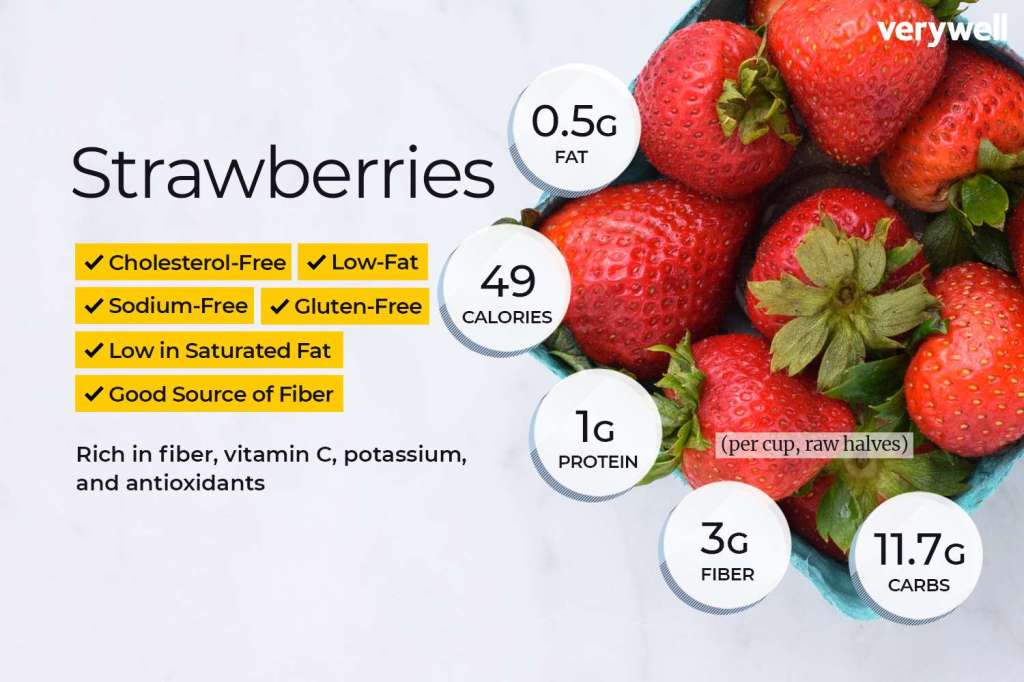
Strawberries have been cultivated since Roman times, not only for their taste but also for their medicinal qualities. Rich in vitamin C, antioxidants, and flavonoids, they were once considered a remedy for everything from melancholy to inflammation.
In culture, strawberries have symbolized purity, sensuality, and abundance. From Renaissance paintings to perfumes, they’ve remained a muse across time.
Today, beyond their nutritional value, strawberries are also studied for their genetic complexity — they’re octoploids, meaning they have eight sets of chromosomes (humans have just two). This makes them a fascinating subject in genetic research and crop engineering.
A Bite of Etymology
The word strawberry is believed to stem from Old English “streawberige”, combining “streaw” (straw) and “berige” (berry). Some suggest this refers to the way straw was traditionally used as mulch around strawberry plants. Others believe it refers to the plant’s runners — which “stray” or spread across the ground.
In Greek, one might poetically refer to it as:
Φραούλα (Phraoúla) — Modern
While a Classical equivalent might use μῆλον τῆς γῆς (mēlon tēs gēs) — “apple of the earth” — as strawberries were unknown to ancient Greeks in their current form.
What This Reveals
This image reminds us that beauty lies in the micro, in the invisible details we overlook each day. The surface of a strawberry, beneath magnification, is less like a fruit and more like an alien coral reef, glowing from within.
So next time you take a bite, know this: within every seed-speckled curve is an unseen world — one just as vibrant and intricate as the one you walk through every day.
 Real Sheldon: a Science Blog
Leave a comment