

Welcome to a new weekly tradition on realsheldon.com — Micro(scopical) Wanders, where science meets storytelling, and the tiniest corners of the world come to life!
Every week, I’ll share a new photo taken through my microscope — from delicate insect wings to strange pond creatures and mysterious mineral shards. But this isn’t just about what you’re seeing… it’s about the story behind it.
What is it? Where does it come from? Why does it matter?
Each post will dive into the background of these micro-marvels, whether it’s a living tardigrade from a rooftop flower pot or a flake of green tea revealing its hidden structure. It’s a blend of curiosity, science, and a touch of wonder — and I’m inviting you along for the ride.
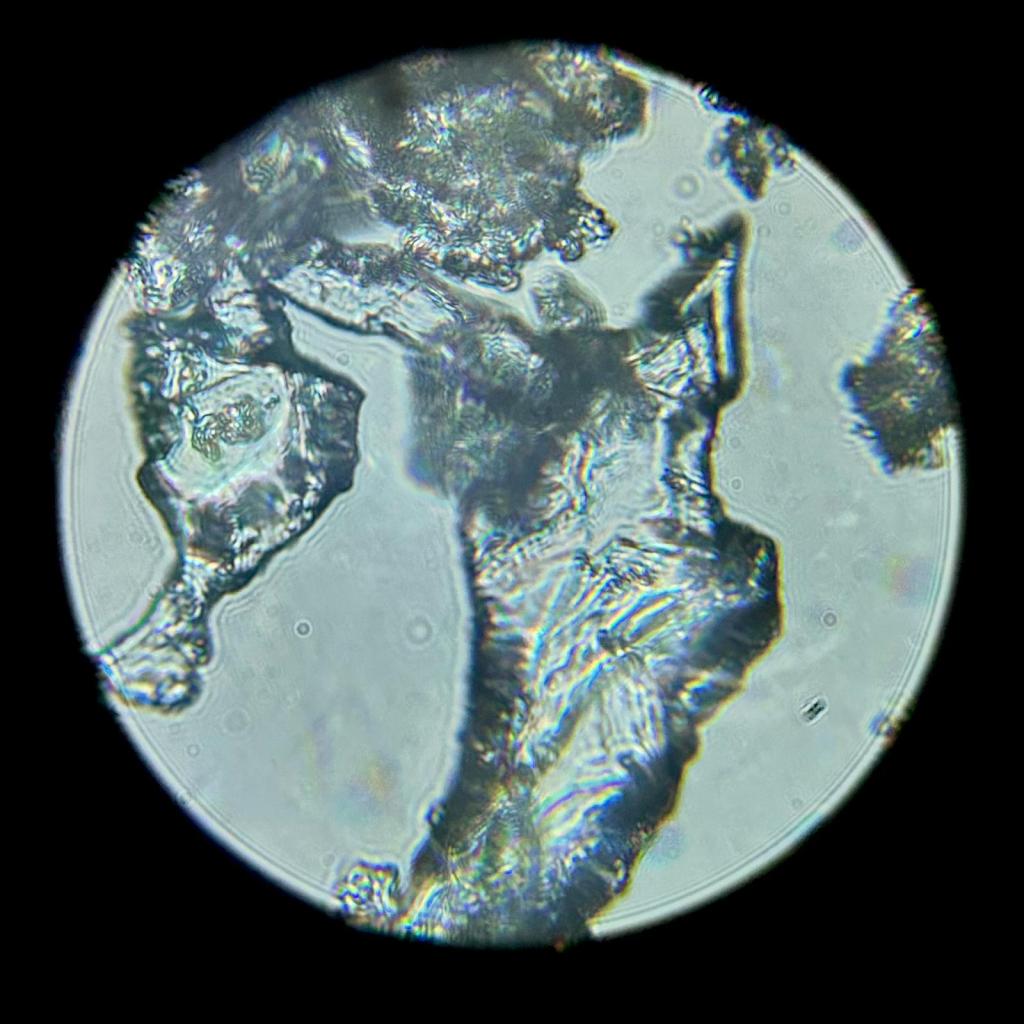
For this debut entry, I decided to start with something simple, beautiful, and solid: a fragment of fluorite.
At first glance, fluorite might look like just another mineral — often transparent, sometimes purple, green, or blue. But under magnification, something magical happens. Jagged edges become crystal canyons. Light scatters off the surface in tiny prisms, as if each shard remembers its long, underground history. In my image, you can see the almost glass-like clarity of the piece I found, with faint textures hinting at its crystalline geometry.
Fluorite isn’t just eye candy. It’s used in optics, metallurgy, and even in fluorescent dyes. And yes — it’s the reason we call something “fluorescent” in the first place! Under UV light, some fluorite varieties glow in stunning blues and purples.

But for me, it’s not about rarity or utility — it’s about rediscovery. This little mineral chunk sat on my desk for months. I’d picked it up at a shop and forgotten about it. Then I looked at it under my microscope… and it transformed into something from a dream.
Sometimes, wonder is sitting right beside us — all it takes is a closer look.
Until next week!
 Real Sheldon: a Science Blog
Leave a comment